
On October 21 and 22, 2025, the Richard Nixon Foundation hosted its annual Grand Strategy Summit in Washington, D.C. With the goal of looking forward, this flagship foreign policy conference brought together policymakers, diplomats, military leaders, and scholars to tackle the world’s most urgent challenges. Against the backdrop of the current presidential administration’s foreign policy achievements, the summit explored how lessons from the past continue to guide America’s role on the global stage. Conversations drew on the enduring legacy of Richard Nixon as a peacemaker and strategist, emphasizing that strong leadership, innovative diplomacy, and forward-looking strategy are essential to securing “peace for generations to come.”
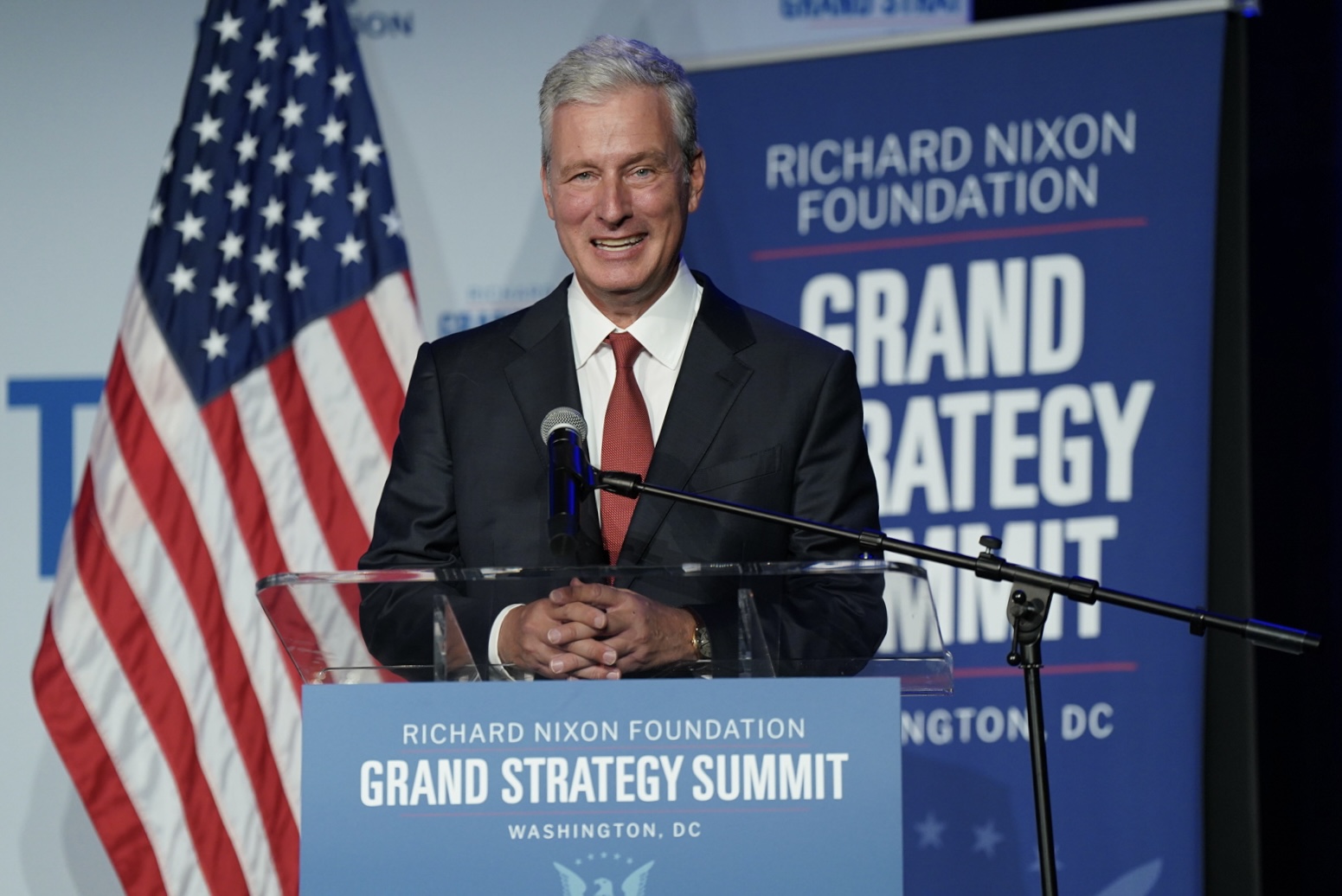
The program kicked off with an announcement from Nixon Foundation Board Chairman and former National Security Advisor, Ambassador Robert C. O’Brien. He announced that earlier that day, he, along with members of the Nixon Family, presented the Richard Nixon Foundation’s Architect of Peace Award to President Donald J. Trump in an Oval Office ceremony. This was the first time a sitting U.S. president had received this award. The Ambassador explained how President Trump’s America First foreign policy and robust personal diplomacy have solidified his legacy as a peacemaker.
The event’s programming continued with three sessions that set the stage for the conference by applying historical lessons to contemporary challenges and sharing approaches to a unified America First domestic and foreign policy that promotes peace and stability around the world.
Opening Conversation: U.S. Senator Dave McCormick and Ambassador Robert O’Brien
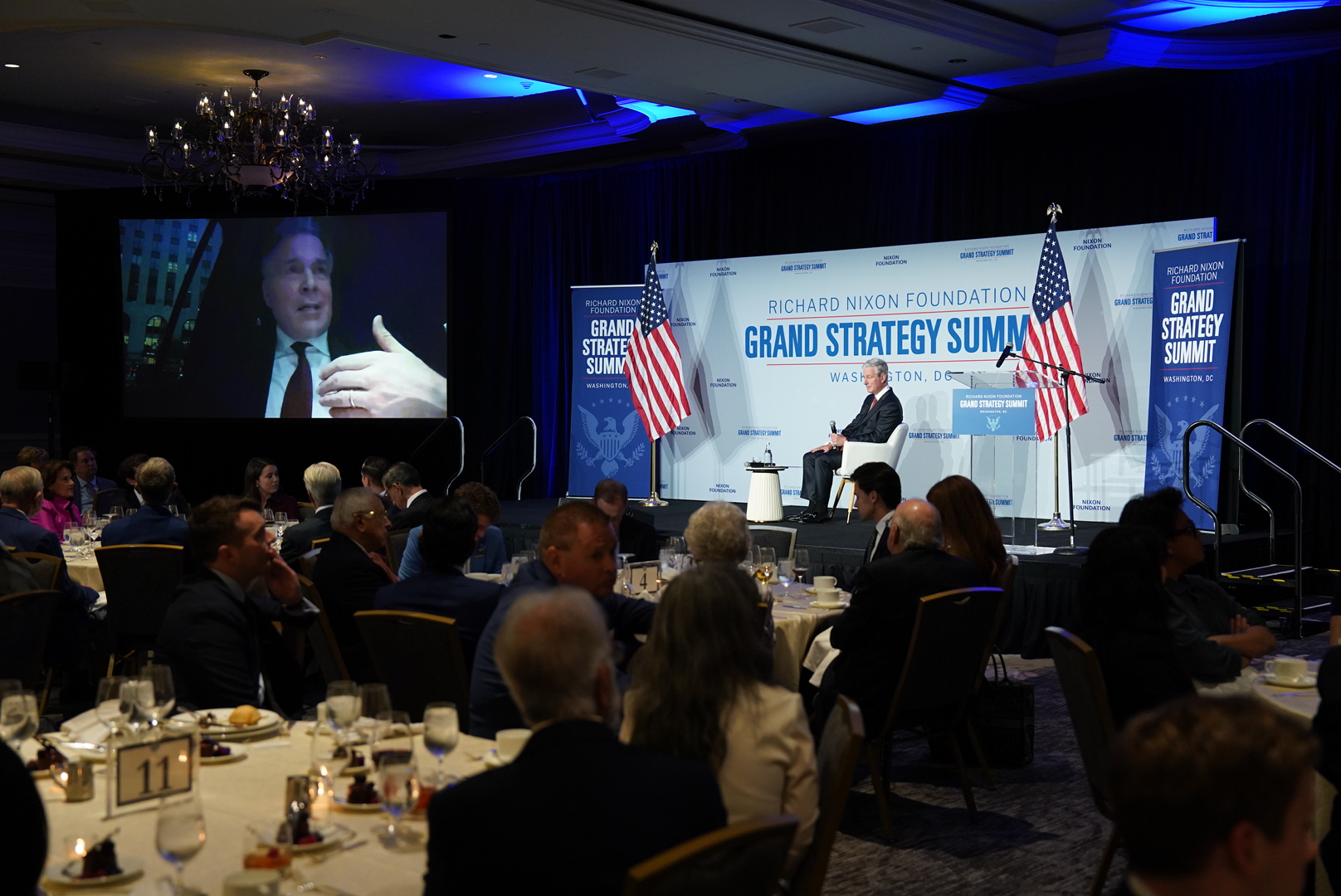
Joining the event live from Capitol Hill before heading into session, U.S. Senator Dave McCormick spoke with Ambassador O’Brien about his current foreign policy initiatives in the legislative branch. Covering historic developments toward peace in the Middle East and his recent visits to Scandinavia and the Baltic states for a close look at the ongoing threat of Russian expansion, Senator McCormick offered real-time analysis of American strategy and critical lessons that should be applied now to prepare for future conflicts. He concluded his remarks with a personal story about how his friendship with President Nixon’s Secretary of State, Henry Kissinger, inspired him to run for office.
Watch here:
Featured Discussion: Rep. Darrell Issa and Matthew Foldi, Editor In Chief for the Washington Reporter
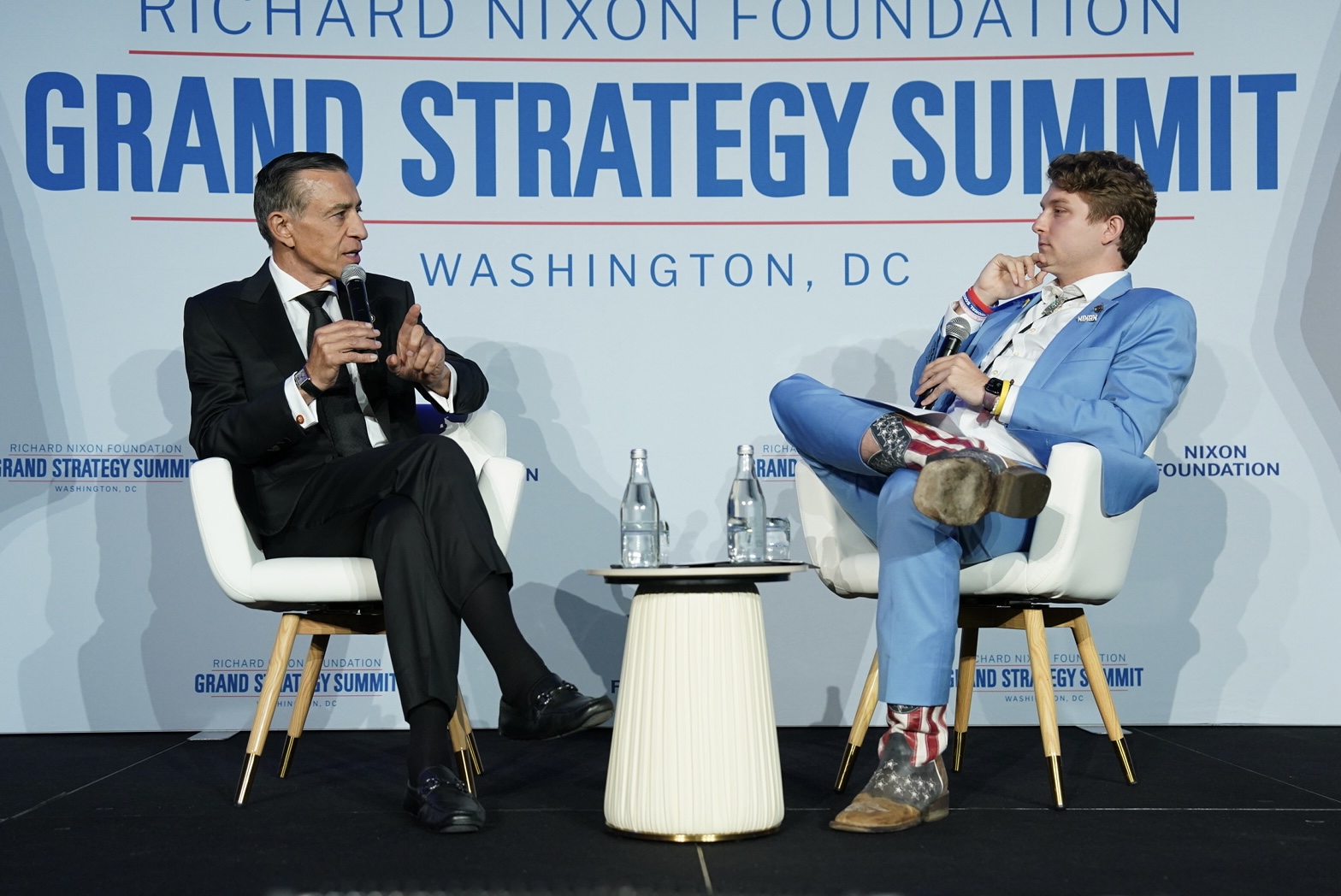
Congressman Darrell Issa joined journalist Matthew Foldi to explore historical and contemporary lessons in leadership and foreign policy. They drew parallels between 1968 and 2024, highlighting the historic comeback election victories of Presidents Nixon and Trump. Issa emphasized how Nixon’s approach to achieving “Peace with Honor” in Vietnam offers lessons for today. As an Army veteran, he reflected on how Nixon’s creation of an all-volunteer military directly shaped his service and helped foster a more unified armed force. He observed that Nixon’s legacy has grown over time, continuing to influence both global and domestic policy.
Watch here:
Before the evening’s keynote address, Christopher Nixon Cox, grandson of President and Mrs. Nixon and Nixon Foundation Board member, gave brief remarks describing the presentation of the Architect of Peace Award to President Trump. Sharing personal reflections, he spoke about how his grandfather instilled in him a lifelong appreciation for the pursuit of peace. Explaining that, “The Architect of Peace Award is something that we take very seriously at the Nixon Library and Nixon Foundation,” Cox said, “It [this award] is a great representation of those in the administration who have worked so hard for the cause of peace.”
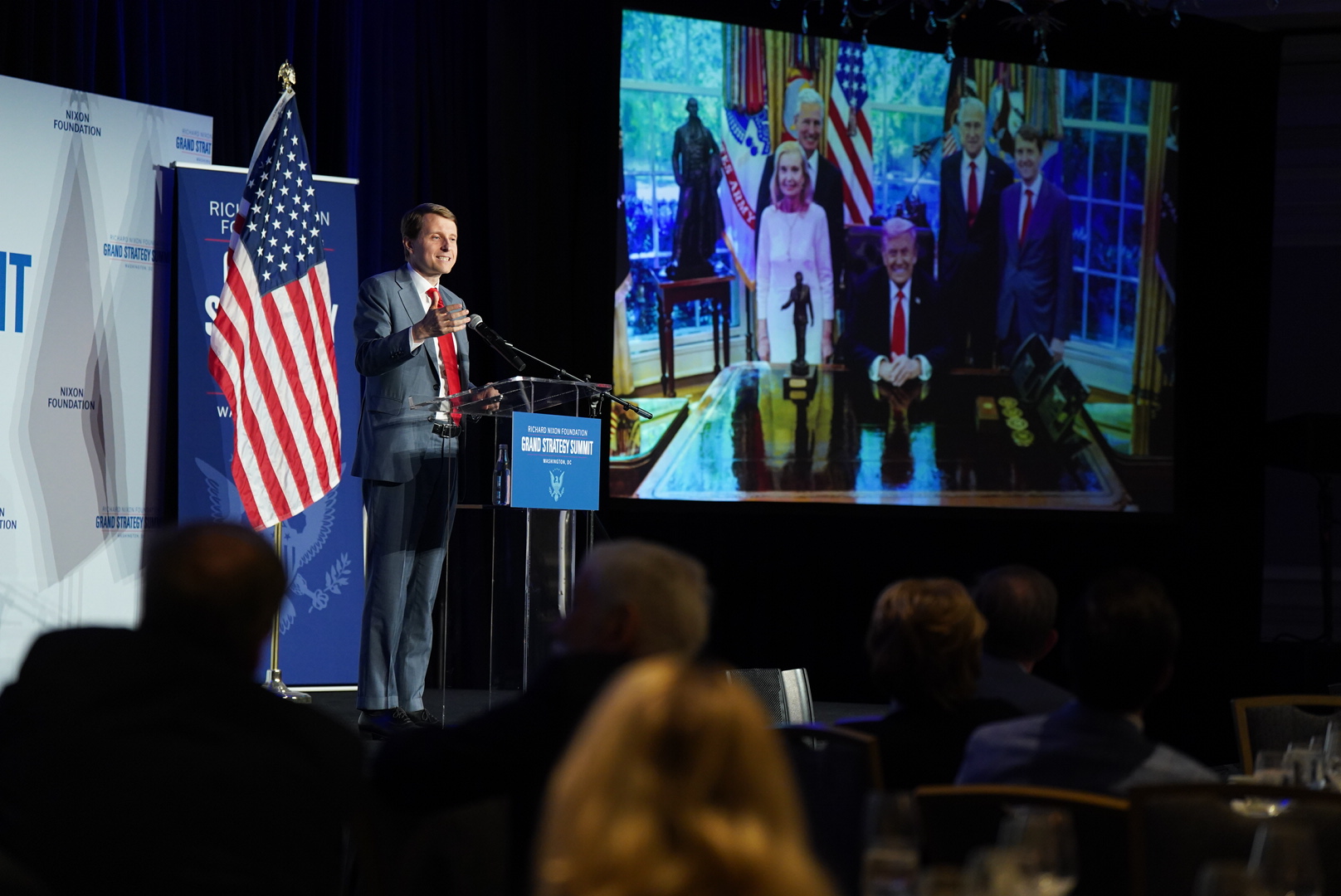
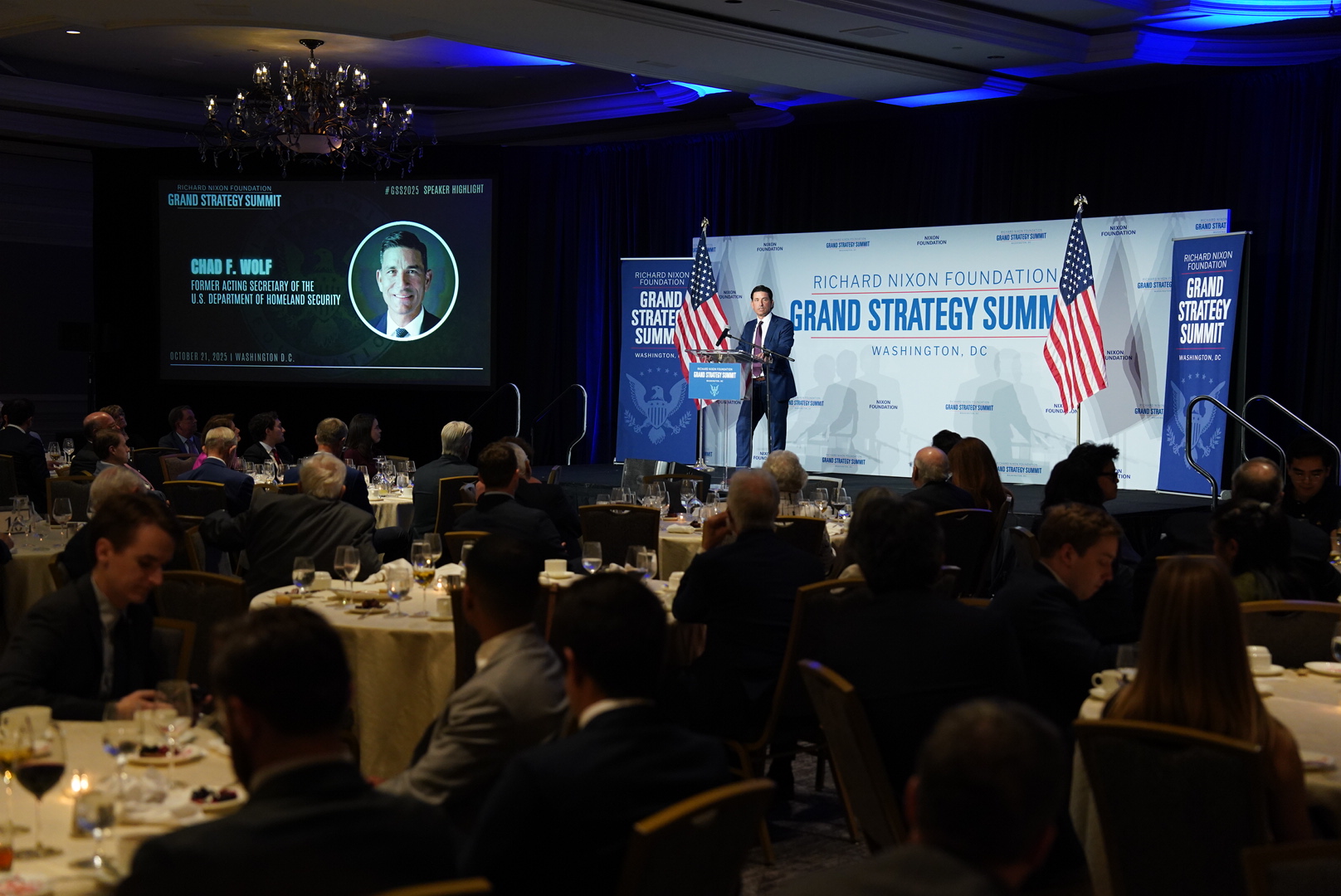
Keynote Remarks: Chad Wolf, former Acting Secretary of Homeland Security
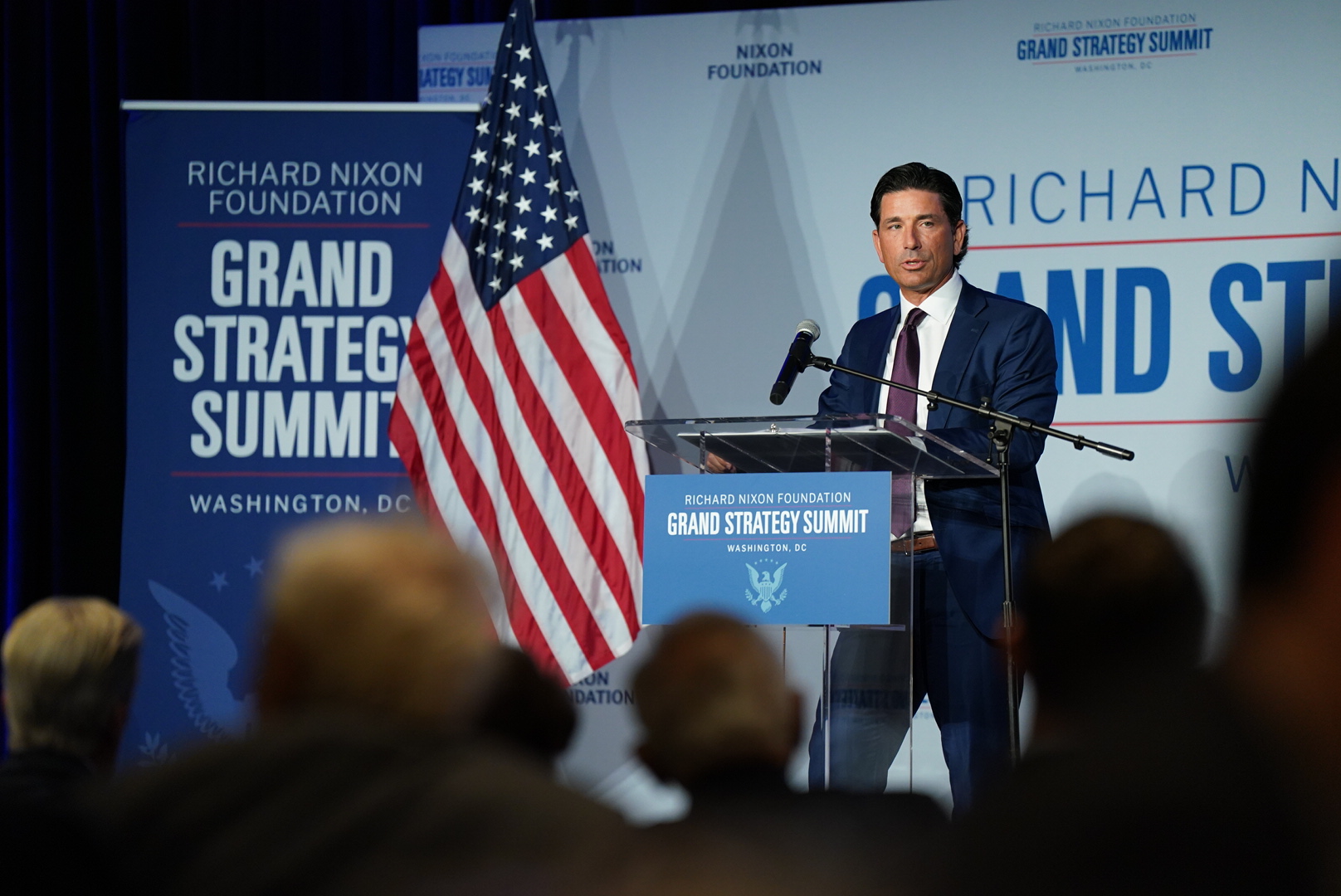
In his keynote address, former Acting Secretary of Homeland Security Chad Wolf outlined key prescriptions for a strong and effective foreign policy strategy. Advocating for an America First approach, he called for a doctrine grounded in strength, cooperation, and long-term strategic preparedness. Wolf emphasized the importance of bringing federal departments together to advance America’s interests and renew President Nixon’s vision of achieving “peace for generations to come.” He underscored that border security and national sovereignty are essential guarantors of peace, protecting the nation’s stability at home while strengthening its position abroad.
Watch here:
October 22 Opening remarks: U.N. Ambassador Mike Waltz in conversation with Christopher Nixon Cox
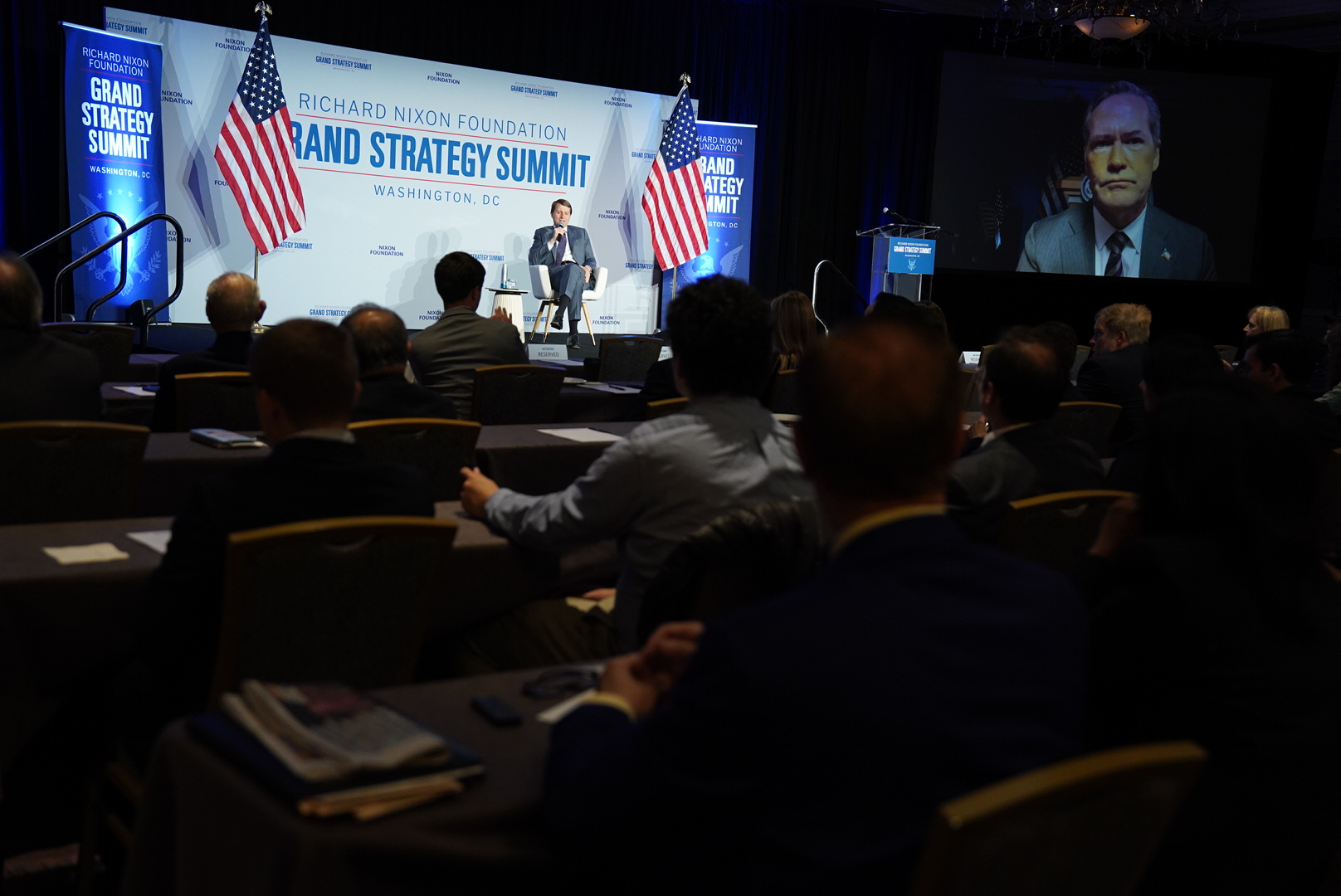
One month into his role as U.S. Ambassador to the United Nations, Mike Waltz reflected on the recent meeting of the UN General Assembly. While discussing his goals for implementing an America First rubric at the UN, he focused on making diplomacy more efficient, developing strategies for addressing global threats, and leveraging emerging technologies to maintain U.S. leadership in the future. Waltz also highlighted ways to strengthen humanitarian and development aid by increasing private-sector involvement in global initiatives. While acknowledging the reforms the UN still requires, he stressed its importance as a central tool of diplomacy. “We need one place in the world where everyone can talk,” he said, “and I want it to be in the United States, not somewhere else.”
Watch here:
Leadership on the World Stage: America’s Role in Shaping Peace
- Bonnie Glick, Deputy Administrator of the United States Agency for International Development (2019-2020)
- Juan Guaidó, Former Interim President of Venezuela
- Matthew Foldi, moderator, Co-founder and Editor in Chief of the Washington Reporter
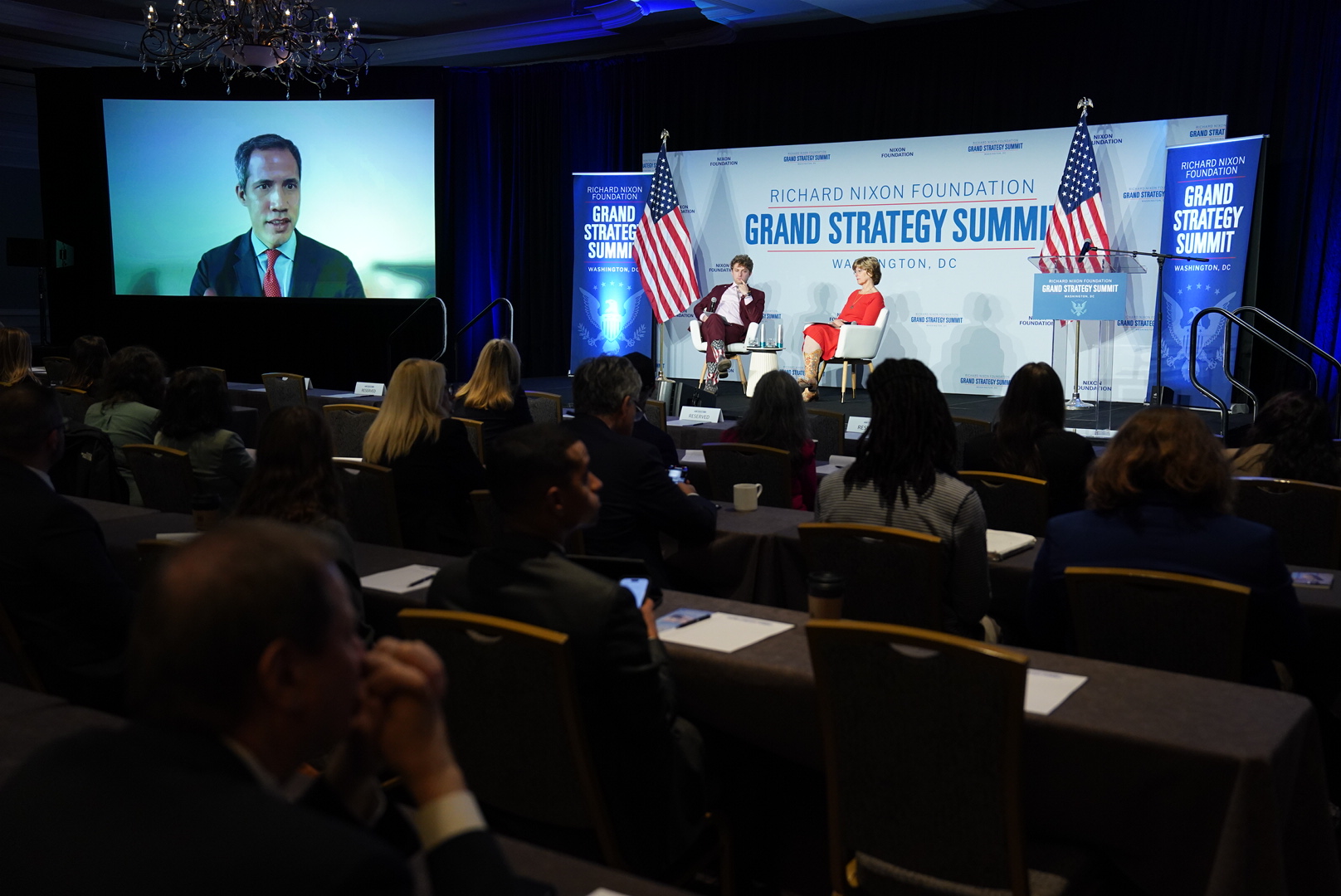
Taking a global tour, this panel assessed how America can navigate challenges and seize opportunities to balance threats while projecting peace. As an exiled former leader of a country under a dictator’s control, Guaidó offered a firsthand perspective on the struggle for democracy and emphasized that the rights and duties of citizenship should never be taken for granted. Using Venezuela as an example, the panel illustrated how seemingly unrelated conflicts can have broad global consequences and discussed the potential for Venezuela to become both a strong trading partner and a peace partner in the Western Hemisphere.
Drawing on her experience with the Abraham Accords, Glick highlighted the power of American diplomatic tools and stressed the importance of leveraging the private sector to harness U.S. innovation as a counter to China’s influence in developing nations. She also emphasized the need to secure supply chains to promote economic growth and national security. The panel concluded that strategic diplomacy, innovation, and strong leadership are essential to advancing democracy and sustaining global peace.
Watch here:
EPA Administrator Lee Zeldin in-conversation with Katie Pavlich
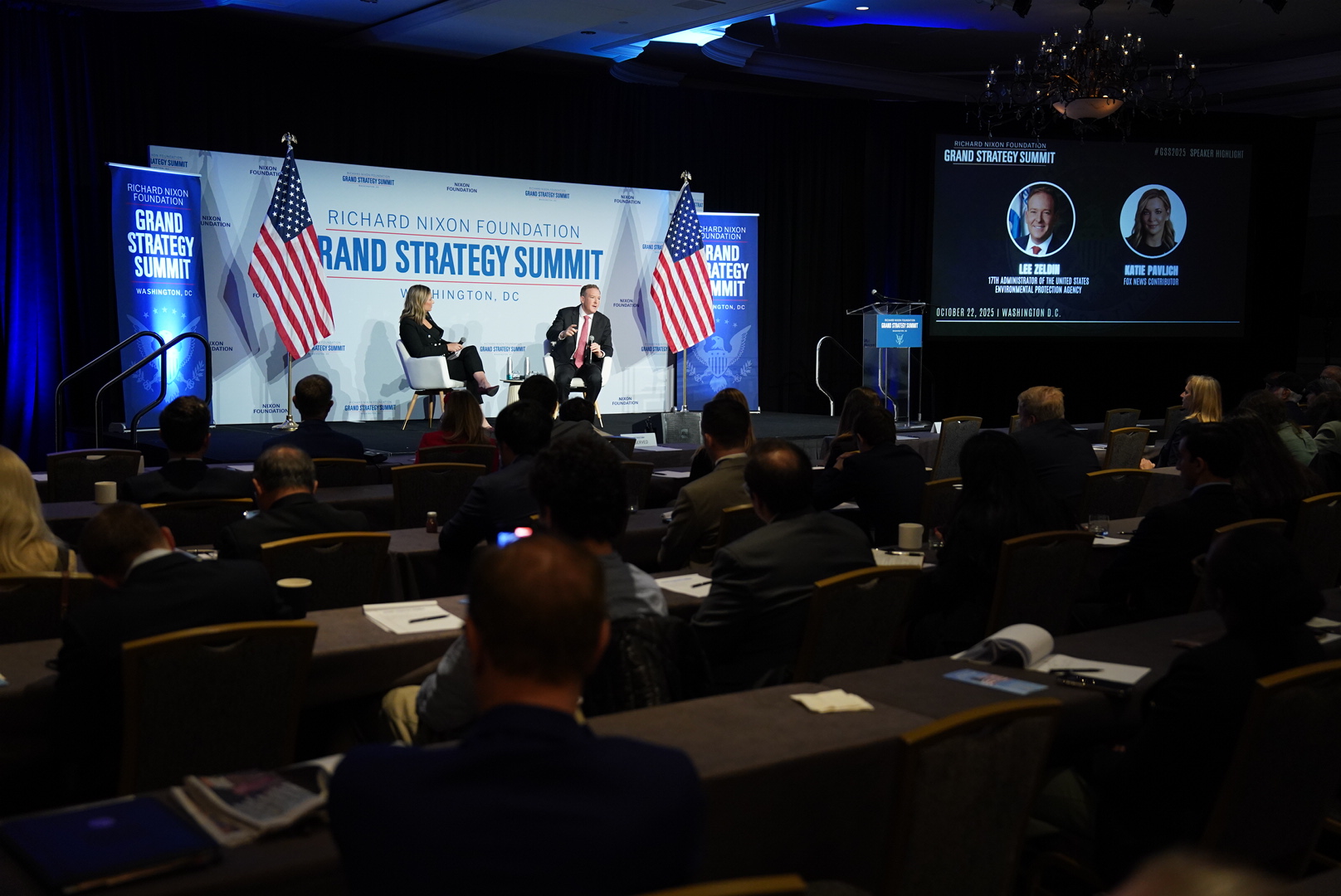
An in-depth conversation between EPA Administrator Lee Zeldin and Fox News contributor Katie Pavlich explored the intersection of environmental policy and national security. Reflecting on the EPA’s founding by President Nixon over 50 years ago, Zeldin highlighted steps taken this year to break down silos, align energy and environmental policy, and pursue Nixon’s vision of clean air and water for all. He emphasized the environmental impact of China and its implications for U.S. national security, as well as the importance of investing in American projects to stay competitive in the global technology race. Zeldin also reflected on the accomplishments of the Trump-era EPA, citing massive deregulation, cost savings, and organizational reforms, and thanked the Nixon family for their enduring legacy.
Watch here:
Keynote Remarks: General John M. Keane, United States Army, Retired
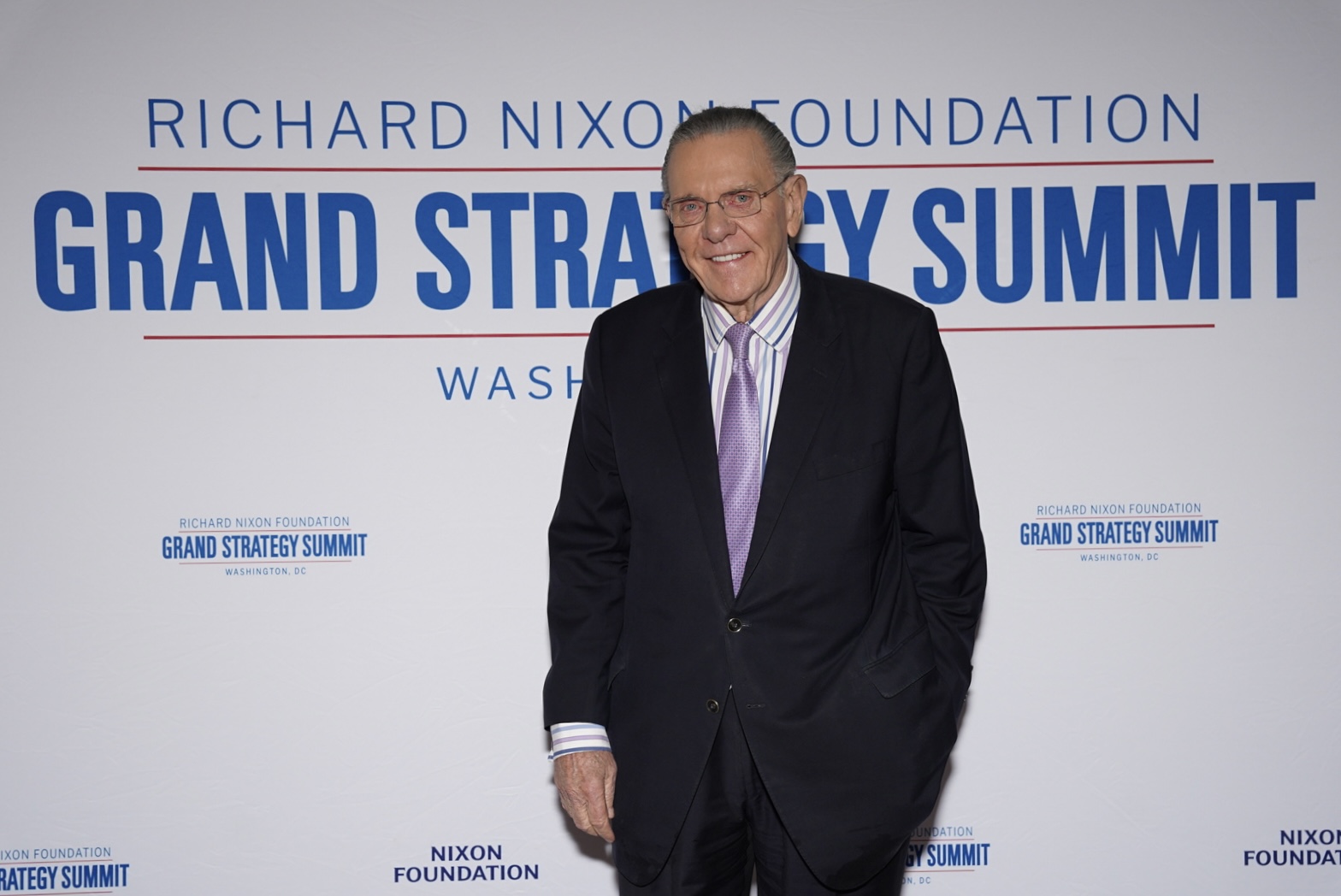
In his keynote address, General Jack Keane offered a clear-eyed assessment of America’s national defense strategy, emphasizing that the world faces more complex threats today than at any point since World War II. Highlighting challenges posed by China, ongoing conflicts in the Middle East, and Russia’s actions in Ukraine, Keane called for a focused and strategic foreign policy rooted in strong American leadership. He stressed that maintaining global stability requires clearly defined strategic objectives and a commitment to applying U.S. influence thoughtfully and decisively.
Watch here:
Grand Strategy for a New Era: An Analysis of Ongoing Conflicts
- Rep. Zach Nunn, Serving Iowa’s 3rd District
- Secretary Robert Wilkie, 10th U.S. Secretary of Veterans Affairs, Under Secretary of Defense (2017-18)
- Katie Pavlich, moderator, Fox News contributor
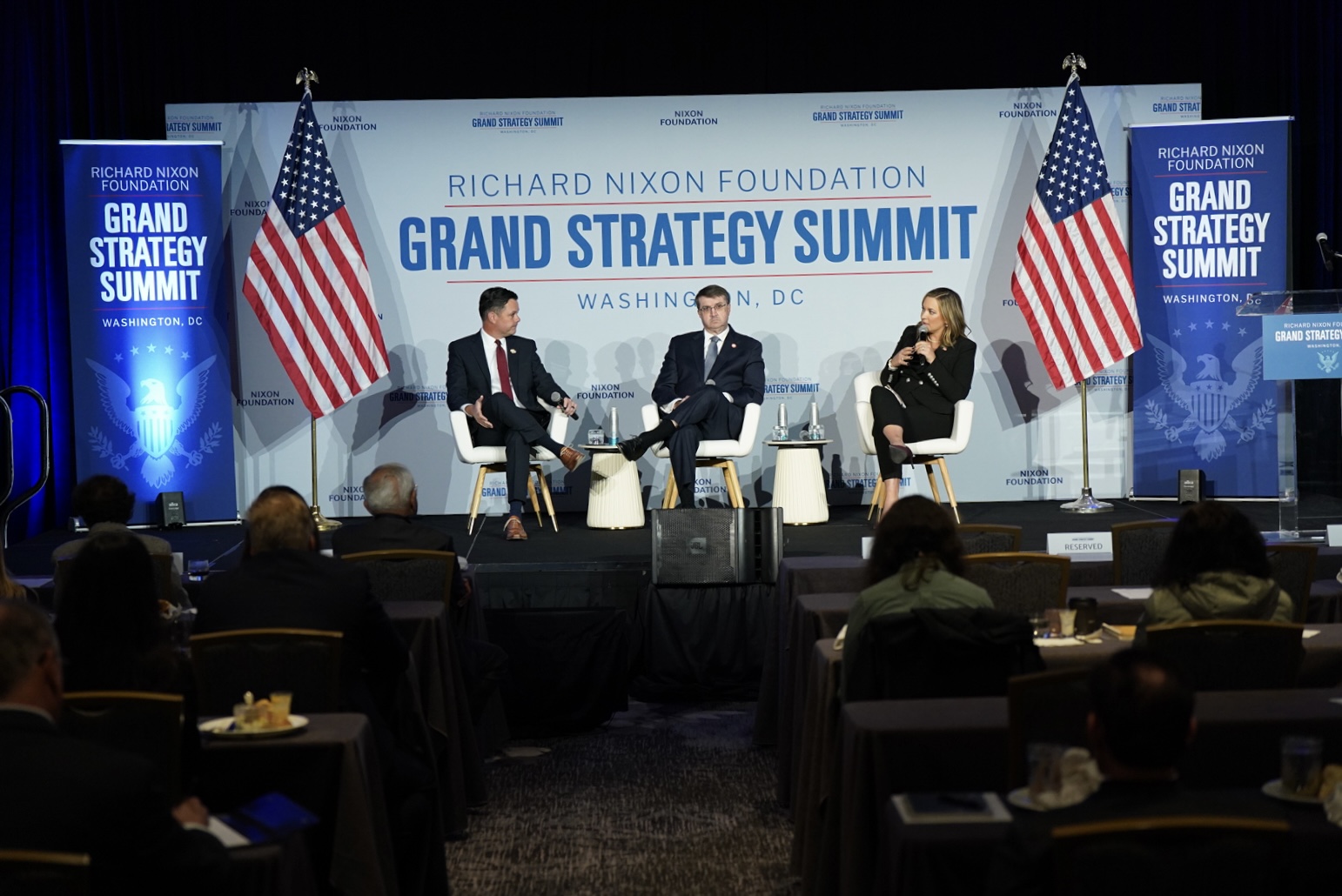
With a focus on geopolitics, this panel examined the most pressing challenges facing U.S. national security today. The panel discussed global hotspots, including Israel, Gaza, and the broader Middle East, with particular attention to the West Bank, described as “a tinderbox,” and explored how U.S. policy impacts both regional stability and domestic security. They highlighted China as the single most pressing national security threat, along with the evolving challenges posed by Russia and the conflict in Ukraine, including questions of arms support and Europe’s role. The discussion emphasized the importance of partnerships, global alliances, and realistic diplomacy, noting the differing approaches of cooperative and adversarial partners. Panelists also addressed military readiness and modernization, from shipbuilding and procurement to adapting to changing warfare, while noting how recent shifts under the current administration have set new standards for what is strategically achievable. Overall, the panel underscored that thoughtful, coordinated U.S. leadership is essential to navigating global conflicts and safeguarding both national and international security.
Watch here:
Closing remarks from Secretary Robert Wilkie- From the Age of Nixon to the Challenge of Now
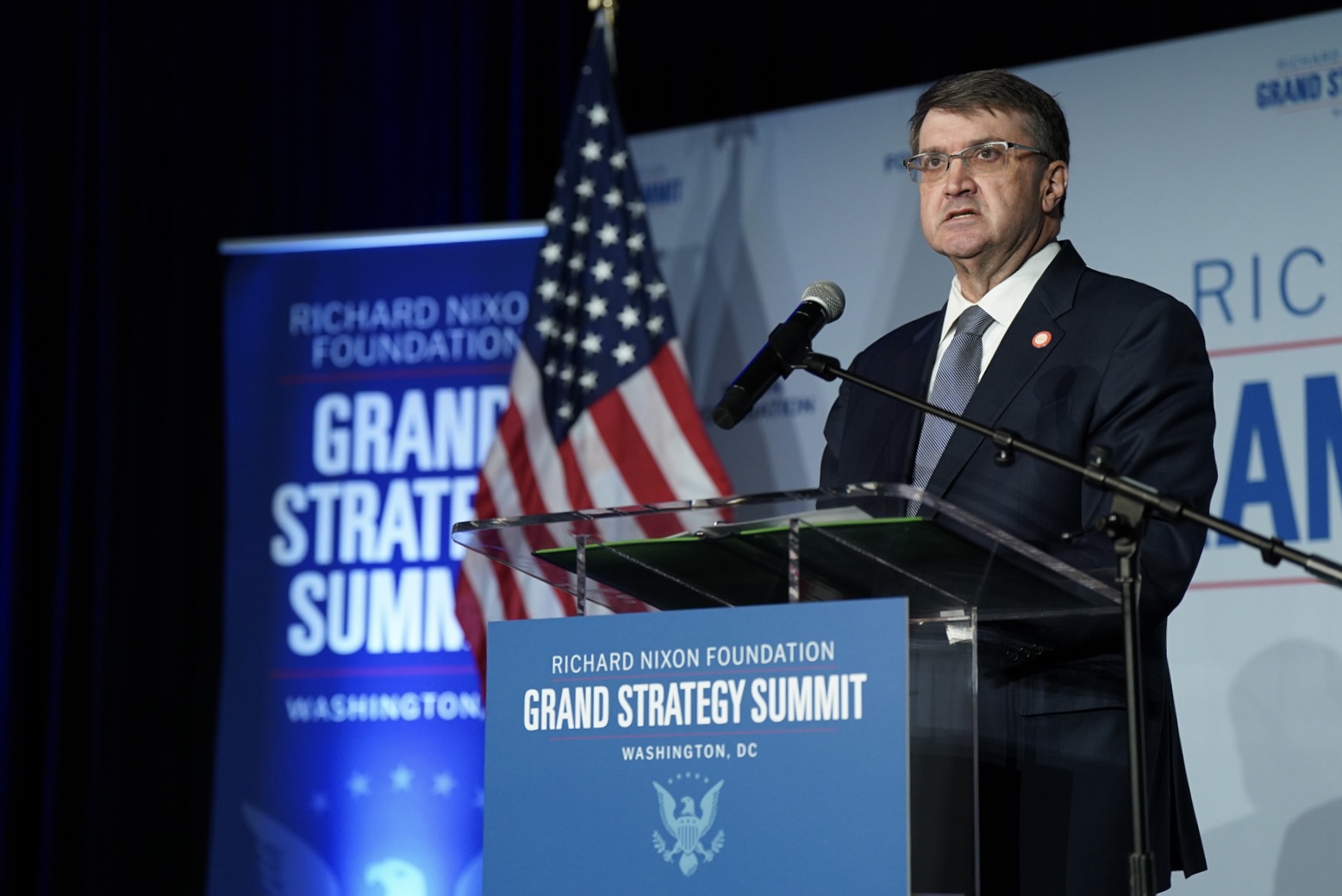
With an eloquent assessment of the challenges of the world today, Secretary Wilkie concluded the conference with remarks emphasizing that the defining question of our time is whether the West has the will to survive. He warned against the dangers of ignoring history, noting that “indifference to history isn’t just ignorance; it is rude,” and highlighted efforts by leaders like Xi and Putin to rewrite history to suit their agendas. Wilkie concluded by noting that, in facing today’s global challenges, looking to President Nixon’s leadership can provide valuable guidance for navigating a complex and uncertain world.
Watch here: